
COMPRESSION THERAPY IN LOS ANGELES
Conveniently located to serve Los Angeles
Compression therapy is a treatment option for managing venous reflux or venous insufficiency. At Nu Vela Laser and Vein Center, we can provide you with information about compression therapy in Los Angeles and offer additional treatment options that may be necessary to help address your specific issues.
What are Compression Stockings?
Compression stockings are specialized elastic stockings that exert pressure against the legs, improving blood flow up the legs towards the heart. Wearing medical-grade compression stockings, which involves undergoing compression therapy, is the first-line treatment for venous reflux or venous insufficiency.
Despite the fact that compression therapy has been used to treat venous disorders since antiquity, with the earliest recorded use found in the Corpus Hippocraticum (450-350 BC), it was not until 1848 that William Brown patented the first elastic compression stockings.
How Compression Therapy Works to Improve Circulation
The mechanism behind compression treatment for veins relies on simple physics applied to the physiology of the veins. By applying pressure to the surface of the leg, the stockings support the underlying vein walls.
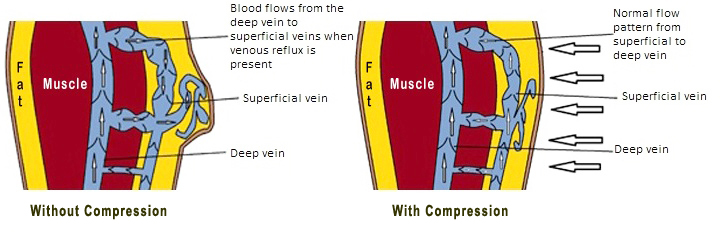
Temporary improvement of venous blood flow with compression.
The Science Behind Compression Therapy for Circulation
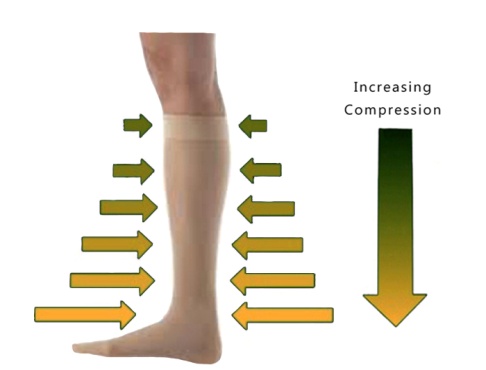
Medical stockings utilize graduated compression. The pressure is strongest at the ankle and gradually decreases as it moves up the leg. This pressure gradient acts as an external pump, fighting gravity to help blood flow back toward the heart. Compression therapy benefits include improved circulation and reduced pooling of blood in the lower legs, as well as a decreased risk of clot formation.
Compression Therapy for Venous Insufficiency, Varicose Veins, and Spider Veins
When the valves in leg veins fail, blood leaks backward, causing venous insufficiency. Venous compression therapy counteracts this reflux by narrowing the diameter of the vein, which helps the valves close more effectively. This process alleviates the pressure that leads to bulging varicose veins and cosmetic spider veins, preventing them from worsening over time.
Who Will Benefit from Wearing Compression Stockings
Anyone with symptomatic vein disease, even in a mild form, may benefit from wearing these stockings, whether while running errands around town or when standing and sitting for extended periods. These stockings help support the legs, boost circulation, and leave the patient feeling better with more energy at the end of the day.
- Pregnant Women: Pregnancy increases blood volume and pressure on the inferior vena cava, making compression vital for preventing varicosities.
- Occupational Risk Groups: Teachers, nurses, and flight attendants who stand or sit for prolonged periods benefit from daily use.
- Frequent Travelers: Long flights pose a risk for DVT; compression stockings are a standard preventive measure.
- Post-Procedure Patients: Those recovering from vein treatments require compression to aid healing.
Who Should Not Wear Compression Stockings?
While beneficial for many, compression is not suitable for everyone. Patients with peripheral artery disease (PAD) should avoid high-compression garments, as they can restrict arterial blood flow. Individuals with severe peripheral neuropathy or certain skin infections may also be ineligible. Dr. Dishakjian performs a thorough evaluation for safety before prescribing vein compression therapy.
Non-Surgical Compression Therapy Treatment Options
We offer various vein compression therapy treatment options to align with patient needs and lifestyle preferences.
Available Varieties of Compression Stockings
Stockings come in different lengths, including knee-high, thigh-high, and pantyhose styles. Knee-high options are generally sufficient for preventing swelling in the lower leg, while thigh-high or full tights may be necessary for varicose veins located above the knee.
PRESSURE VARIATION IN GRADUAL COMPRESSION STOCKINGS
How to Choose the Right Compression Level
Compression levels are measured in millimeters of mercury (mmHg).
- 8-15 mmHg: Mild compression available over the counter.
- 15-20 mmHg: Moderate compression for minor swelling or travel.
- 20-30 mmHg: Medical-grade compression (Class I) used for varicose veins and mild edema.
- 30-40 mmHg: Strong compression (Class II) for severe chronic venous insufficiency and DVT management. Dr. Dishakjian determines the appropriate pressure level based on the severity of the vein disease.
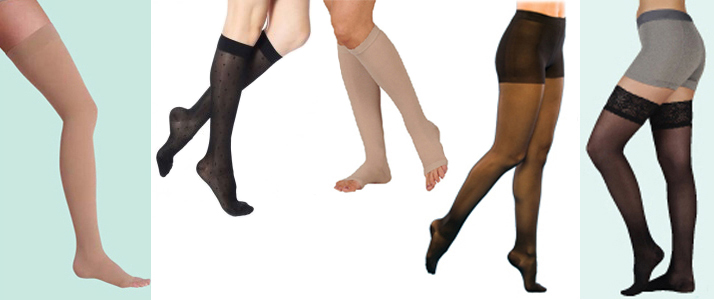
Different styles of gradient compression stockings.
Compression Therapy for Leg Ulcers
For patients suffering from venous stasis ulcers, strong compression is the standard of care. It reduces the high venous pressure that causes the ulcer, allowing the wound to heal. In these cases, consistent adherence to the therapy regimen is critical for recovery.
When and How to Wear Compression Stockings
Patients should put on their stockings immediately after waking up, before getting out of bed. This is when limb swelling is at its lowest. The stockings should be worn throughout the day and removed before sleep unless Dr. Dishakjian instructs otherwise. It is important to smooth out any wrinkles, as bunched fabric can act as a tourniquet.
How to Take Care of Medical Grade Compression Stockings
To maintain elasticity, wash the stockings daily or every other day by hand with mild soap and warm water. Avoid harsh detergents or bleach. Air dry them away from direct heat to prevent the elastic fibers from breaking down. Replace the garments every three to six months as they lose their compressive strength over time.
Where to Buy Medical Grade Compression Stockings
While generic support hose is available at drugstores, compression therapy vascular clinic standards require precise fitting. Nu Vela Laser and Vein Center provides professional measuring services to ensure patients receive prescription-grade stockings that fit their specific anatomical measurements. If you are searching for “vein compression therapy near me,” our clinic offers direct access to high-quality medical garments verified by a phlebologist.
What to Expect After Starting Compression Therapy
Most patients experience immediate relief from leg heaviness and pain upon wearing the stockings. By the end of the first day, there is typically a noticeable reduction in evening ankle swelling. While compression manages symptoms effectively, it does not permanently remove existing varicose veins. It is a management strategy rather than a cure.
However, consistent use prevents the condition from progressing and improves the skin’s visible health over time, as evidenced by weeks and months. For permanent removal, procedures such as sclerotherapy may be recommended.
Factors That Affect Compression Therapy Cost
The price depends on the brand, material durability, and compression class. Custom-fitted, flat-knit stockings for lymphedema generally cost more than standard circular-knit stockings for varicose veins.
Why Choose Nu Vela Laser and Vein Center
Dr. Raffi Dishakjian brings extensive expertise as a phlebologist in Los Angeles to the diagnosis and management of venous disorders. At Nu Vela Laser and Vein Center, we make sure that your compression therapy is tailored to your specific medical needs, prioritizing safety and maximizing therapeutic benefits. We move beyond simple sizing to assess your overall vascular health.
Frequently Asked Questions About Compression Therapy
+ How tight should my compression stockings feel?
They should feel snug and supportive, but not painful. If the stockings cause numbness, tingling, or color changes in your toes, they may be too tight and should be removed immediately.
+ Do compression stockings cure varicose veins permanently?
No, compression stockings do not cure or remove existing varicose veins. They manage symptoms, slow the progression of vein disease, and prevent new veins from forming, but they cannot eliminate structural vein damage that has already occurred.
+ Will insurance cover the cost of my compression stockings?
Many insurance plans cover medical-grade compression stockings if a physician prescribes them for a specific medical diagnosis. You often need to provide documentation showing that you have tried conservative therapy before approval; please visit our financing page for more details.
+ How often should I replace my compression stockings?
Medical compression garments typically lose their elasticity and therapeutic pressure after three to six months of daily wear. We recommend replacing them regularly to maintain the correct level of compression and support.
+ Is there a difference between anti-embolism stockings and compression stockings?
Yes, anti-embolism stockings (often white) are designed for bedridden patients to prevent clots while they are immobile. Graduated compression stockings are made for ambulatory (walking) patients and provide a higher pressure level to support veins against gravity during movement.
Take the Next Step Toward Healthier Circulation
If you struggle with leg swelling, aching veins, or fatigue, medical compression may be the solution you need. Contact Nu Vela Laser and Vein Center today to schedule a consultation with Dr. Dishakjian. Let us help you find the correct vein compression therapy to improve your comfort and vascular health.