Conveniently located to serve Los Angeles

Endovenous laser treatment at Nu Vela is performed by Raffi Dishakjian, MD, who has used the technique since 2005. A laser fiber is passed into the diseased vein through a needle hole, under ultrasound guidance, and laser heat seals the vein from within. Below, the treatment is described from Dr. Dishakjian’s point of view.
EVLT at a Glance
- Veins treated: incompetent saphenous and perforator veins, the root cause of most varicose veins.
- Method: ultrasound-guided thermal ablation. A laser fiber seals the diseased vein from within, using the Sciton Pro-V laser (1319 nm).
- Before treatment: a Duplex Venous Ultrasound maps the problem vein.
- Anesthesia: a dilute numbing solution injected around the vein. Patients are awake and can walk immediately.
- Afterwards: the leg is wrapped with bandages and compression stockings. Patients are advised not to drive home, and most resume their normal activities the next day.
- Results: the bulging surface veins show dramatic visible improvement within a few weeks.
- Performed by: Raffi Dishakjian, MD, who personally performs all laser and vein procedures at Nu Vela.
What are Varicose Veins?
Varicose veins occur when blood flow in your legs reverses direction, causing veins to bulge and twist. This can lead to symptoms like leg pain, heaviness, and fatigue. In some cases, if left untreated, varicose veins can develop into more serious complications.
Importance of Closing Saphenous or Perforator Veins
Closing problematic saphenous or perforator veins, which are not visible to the naked eye, is crucial for lasting relief from symptoms associated with chronic venous insufficiency or varicose veins. This closure also improves the condition, enabling long-term improvement in the appearance of branch varicosities and other smaller, unsightly veins.
Why Sciton Pro-V Laser is Ideal for Varicose Veins
The Sciton Pro-V laser, a newer generation FDA-approved laser, is used at Nu Vela Laser and Vein Center. It uses an optimal wavelength of 1319 nm, ideal for vein ablation as it targets the vein wall itself, not the blood content of the vein. This results in a fast, comfortable varicose vein ablation with a smooth recovery experience.

How Thermal Vein Ablation Works for Varicose Veins
Until the early 2000s, vein ligation/stripping surgery was the only option for treating bulging leg varicose veins. This surgical treatment for varicose veins involved the physical removal of the targeted vein, required hospitalization and general anesthesia, and often led to scarring, along with significant post-surgical pain and discomfort.
Unlike traditional ligation/stripping surgery, Endovenous Laser Treatment for varicose veins (commonly known as EVLT, ELT, EVLA) does not involve the physical removal of a vein but relies on ultrasound image-guided thermal ablation (damaging and sealing with heat application) of the diseased varicose vein from within the vein by using a laser fiber introduced through a slightly enlarged needle hole near the targeted vein.
Note that surface lasers intended for the laser removal of small superficial veins, such as spider veins, are not effective in treating the larger varicose veins and would risk causing significant thermal damage to surrounding tissue if used on these veins. If interested in the application of surface lasers in vein treatment, click laser spider vein treatment or laser removal of facial veins.
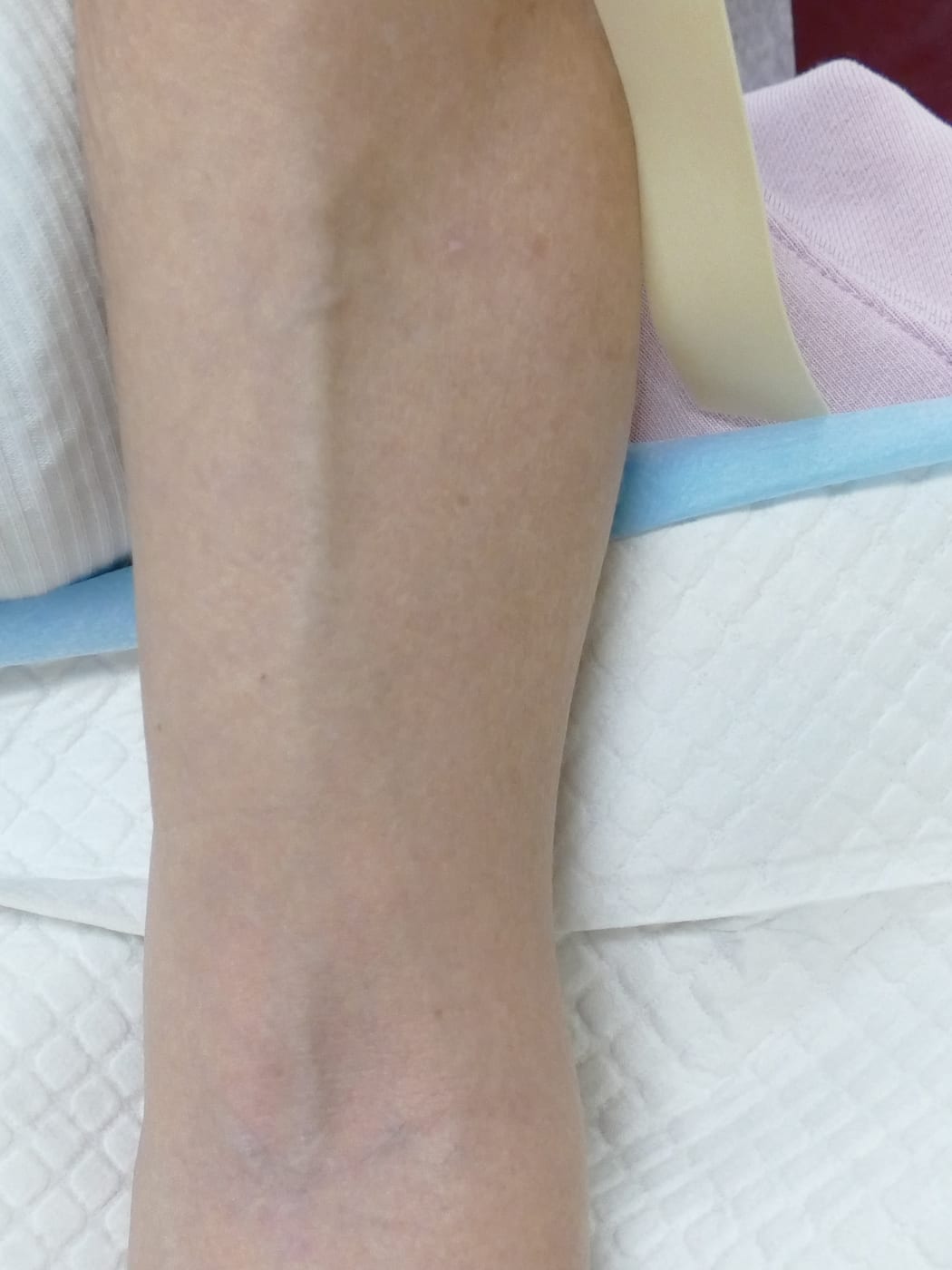
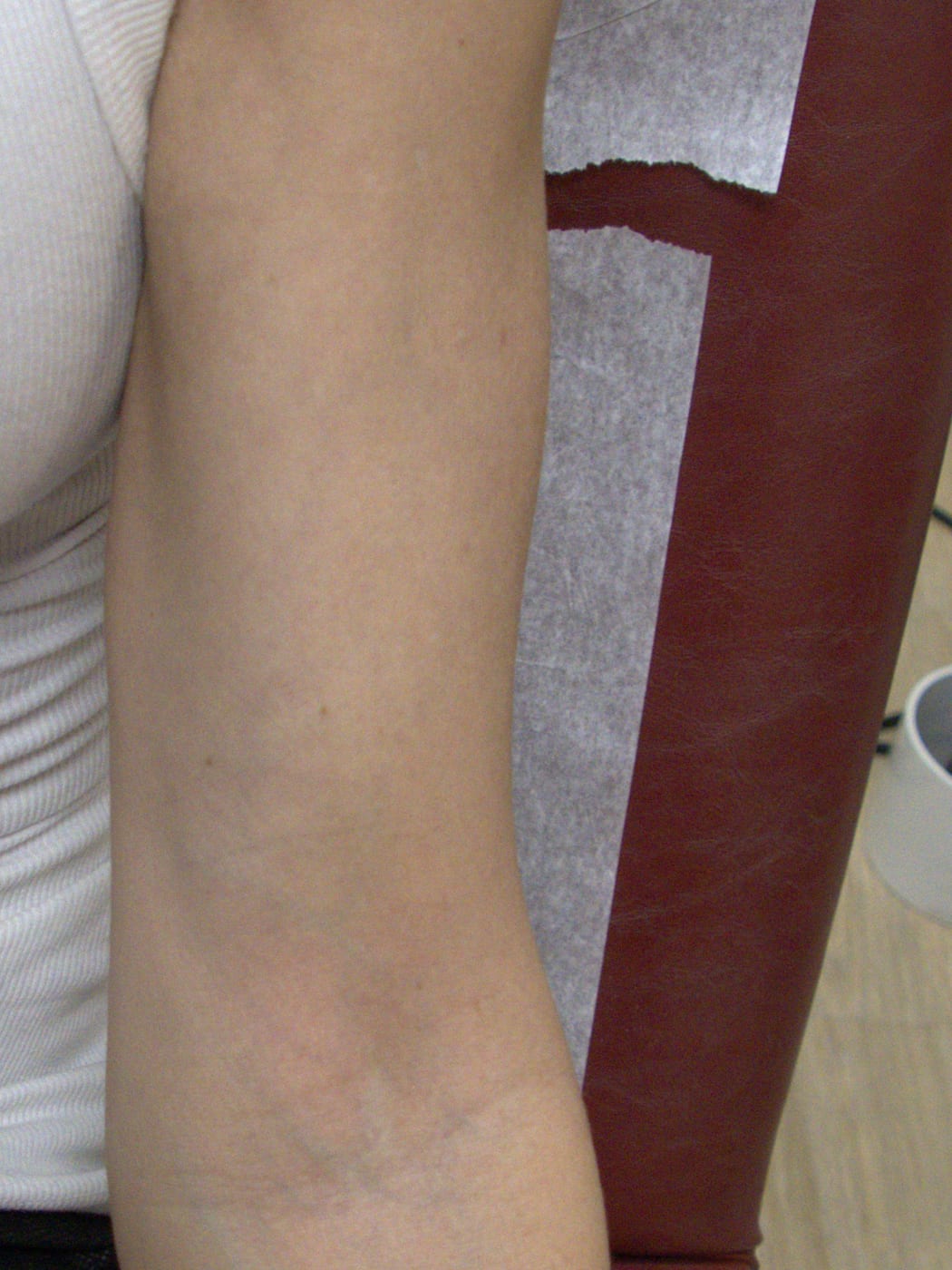
I also use the same endovenous (laser fiber-based) ablation technique outside the legs: for bulging forehead veins, and for very large forearm and arm veins that are too large to treat safely and effectively with sclerotherapy injections.
A large arm vein before and after EVLT
*Individual results may vary.
The Veins That Are Targeted with Endovenous Laser Therapy (EVLT)
Varicose veins develop mainly when blood from deep veins flows in a reverse pattern into the superficial main veins of the leg; namely, the saphenous veins and the connecting perforator veins. The resultant downward flow of blood with gravity, instead of the upward movement toward the heart, results in a condition known as venous reflux or venous insufficiency.
If not treated, the latter may cause restless legs at night, leg cramps, heaviness, and pain in the legs and may progress into several more serious complications, such as hardening and pigmentation of the tissues above the ankle, bleeding, leg swelling (edema), venous congestion ulcers (venous stasis ulcers), and superficial venous thrombosis.
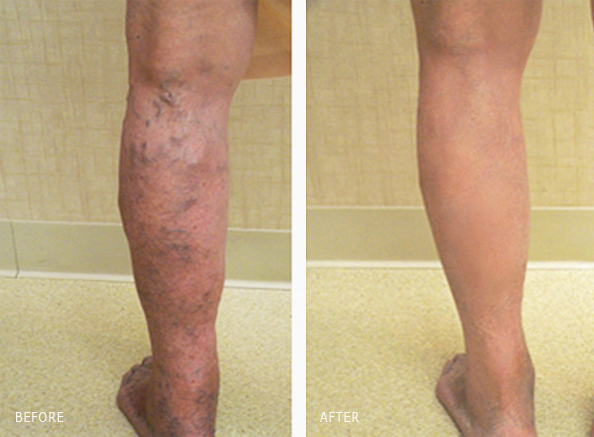
EVLT Treatment Result After Five Weeks
*Individual results may vary.
Endovenous laser treatment targets incompetent saphenous and perforator veins to correct the blood flow pattern and treat venous reflux. Once these incompetent veins are thermally ablated, the blood ceases to flow in them, and the blood flow in the deep veins reverts to its normal pattern towards the heart. Within a few weeks following the treatment, the enlarged and bulging superficial leg veins adjust back to normal pressure conditions and show dramatic visible improvement in their appearance.
A few weeks following Endovenous Laser Treatment, further cosmetic improvement can be achieved by treating the residual veins with microphlebectomy, foam sclerotherapy, or sclerotherapy, three common non-surgical procedures for foot and leg vein treatment.
Note that occasionally varicose veins may appear without any underlying venous reflux from the deep veins, although in most cases venous reflux is present and, as such, has to be actively sought out and diagnosed with Venous Duplex Ultrasound before proceeding forward with treatment regimens targeting the visible surface veins.
What to Expect During Your EVLT Treatment
At Nu Vela, I will first take a full set of baseline pictures of the legs and then perform a Duplex Venous Ultrasound imaging to mark the anatomic location of the problematic vein on the overlying skin.
Additional points that I would note include the caliber of the vein, any significant side branches, curved or twisted segments in the vein, and the most suitable needle entry point into the vein—most commonly located just above or below the knee area, depending on which vein is targeted.
When treatment starts, I will insert a tube (catheter) in the vein and pass a laser fiber through it using ultrasound guidance. After carefully pushing the fiber inside the vein towards the targeted section of the vein, I will inject an abundant quantity of a dilute numbing solution around the vein, which, besides its numbing action, acts as an insulating sleeve and protects the surrounding tissues from heat damage.
As I apply short bursts of laser energy and withdraw the fiber, the heat applied to the vein wall will destroy its regenerative capacity and the vein will shrink and eventually close. The session will end after wrapping the leg with bandages and applying compression stockings.
Although patients are awake during the procedure and can walk immediately, they are advised not to drive back home as the treated leg may be partially numb. Most patients resume their normal activities even on the next day, as pain is bearable and easily manageable with over-the-counter medications, such as Advil.
EVLT and Sclerotherapy Before and After

*Individual results may vary.
How to Care for Yourself After EVLT Treatment
Instructions for preparing yourself for Endovenous Laser Treatment of varicose veins and aftercare are essentially the same as those recommended for Venefit™ Targeted Endovenous Therapy. Please click EVLT & Venefit FAQ for answers to questions you may have about these procedures, or go to Varicose Veins FAQ to find answers related to varicose veins and their treatment.
Why Patients Choose Dr. Dishakjian
Selecting the right physician for EVLT is just as important as choosing the right procedure. Dr. Raffi Dishakjian has dedicated his practice to minimally invasive vein care since founding Nu Vela Laser and Vein Center in Porter Ranch in 2005. As a board-certified physician, phlebologist, and cosmetic surgeon, he combines advanced knowledge of venous disease with an appreciation for achieving aesthetically pleasing results, helping patients improve both their vascular health and the appearance of their legs.
Unlike many practices where different providers handle consultations, ultrasound imaging, and treatment, Dr. Dishakjian personally oversees every stage of care. He performs the diagnostic Duplex Ultrasound, develops the treatment strategy, and carries out the EVLT procedure himself, ensuring continuity, precision, and individualized attention from start to finish. His investment in proven vein technologies and reputation for honest recommendations have made Nu Vela a trusted destination for varicose vein treatment in the Los Angeles area.
Benefits of Endovenous Laser Therapy
- Minimally invasive
- Effectively treats the underlying cause of many varicose veins rather than just their appearance
- No general anesthesia or hospital stay required
- Most patients are able to resume normal daily activities by the next day.
- Helps relieve symptoms such as leg pain, heaviness, swelling, cramping, and fatigue
- Long-lasting improvement in both vein health and leg appearance
- Uses ultrasound guidance for accurate, targeted treatment of diseased veins
The Results Were Amazing!
“For many years, doctors told me the only way to remove my bulging, painful varicose veins was by performing surgery. But I didn’t want to go under the knife – with its risks, long downtime, and pain! As a massage therapist, I needed to be back to work quickly. At Nu Vela Vein Center, Dr. Dishakjian suggested foam sclerotherapy as a much safer, easier solution. It only took a few minutes, and the results were amazing! Within two days, the aching and heaviness that I had felt for 15 years disappeared. My legs already look a lot better in just two weeks. I’m finally looking forward to wearing shorts this summer.”
by Karen R.
EVLT Cost, Insurance Coverage, and Treatment Considerations
For any queries regarding the cost of EVLT for varicose veins, insurance coverage, additional information, or scheduling a consultation session with Dr. Dishakjian, the phlebologist of the vein clinic, call 818-832-4500. Consultations with the doctor are free with the purchase of any service. We charge a nominal fee for the first office visit only. This fee is fully credited towards the cost of a subsequently purchased service. Note that consultation does not include the charge for a venous Duplex Ultrasound test when indicated. However, most of the fee for the ultrasound test is reimbursed to you with a follow-up endovenous treatment procedure.
Click vein treatment in Los Angeles to read about other treatments available at the Center.
Take the First Step to Healthier Legs at Nu Vela
Don’t let varicose veins affect your confidence or comfort any longer. At Nu Vela Laser & Vein Center, we specialize in Endovenous Laser Therapy (EVLT)—a safe, minimally invasive, and highly effective treatment to restore the health and appearance of your legs. Our experienced team is dedicated to providing personalized care and cutting-edge solutions for your vein concerns.
Schedule your consultation today and discover how EVLT can help you!
FAQs About EVLT Treatment
+ Am I a Good Candidate for EVLT?
Good candidates for EVLT have symptomatic varicose veins caused by venous reflux, including leg pain, heaviness, swelling, fatigue, or bulging veins that interfere with your daily activities. EVLT is suitable for many adults and can be performed on all skin types and vein colors. However, conditions like deep vein thrombosis, pregnancy, and severe peripheral arterial disease may require different treatments.
+ What is the durability of EVLT results, and what factors affect it?
EVLT offers long-lasting relief from varicose veins, with results that can endure for years. Lifestyle choices, genetic factors, and following post-treatment recommendations all play roles in maintaining these results. Activities like regular exercise, maintaining a healthy weight, and using compression stockings help prolong EVLT’s benefits.
+ Can EVLT Be Performed on All Skin Types and Vein Colors, and Are There Any Contraindications to Be Aware of?
EVLT works well for all skin types and vein colors. However, it’s not suitable for everyone. Conditions like deep vein thrombosis, pregnancy, and severe peripheral arterial disease may require different treatments.
+ Can EVLT be repeated for recurring varicose veins? What should be considered?
If varicose veins return, EVLT can be redone. Doctors will evaluate the cause of the recurrence and may adjust the treatment strategy to achieve the best long-term outcome.
+ Is there an ideal age for EVLT?
There is no specific age requirement for EVLT, as candidacy is based primarily on vein health. Younger and older adults alike may benefit from treatment when venous reflux is present.
+ Will EVLT affect my ability to exercise in the future?
No, EVLT is intended to improve circulation and relieve symptoms that may interfere with physical activity. Once you’ve fully recovered, you should be able to return to your standard exercise routine.
+ Can both legs be treated with EVLT?
Yes, both legs can often be treated, although the timing depends on the extent of your venous disease and your individualized treatment plan. Dr. Dishakjian will determine whether treating both legs during the same visit is appropriate.
Published Research on Endovenous Laser Treatment
A 2021 Cochrane review of 24 randomized trials with 5,135 participants compared the treatments used for reflux in the great saphenous vein, including endovenous laser ablation, radiofrequency ablation, foam sclerotherapy, and surgery. The review found that the rate of technical success was comparable between most of the treatments. Complications were generally low for all of them, although the trials defined and timed them so differently that the review could not draw conclusions.
The 2023 clinical practice guidelines of the Society for Vascular Surgery, the American Venous Forum, and the American Vein and Lymphatic Society (Part II, published in 2024) recommend endovenous ablation over high ligation and stripping, the traditional surgery, for patients with symptomatic varicose veins and reflux in the great saphenous vein who are candidates for intervention.
On the choice of wavelength, a 2005 study in Dermatologic Surgery found that endovenous treatment of the great saphenous vein with a 1,320 nm Nd:YAG laser caused fewer side effects than treatment with a 940 nm diode laser at 30 W: treatment-related pain was reported in 50% of cases, against 81%, and pain medication was needed in 36%, against 67%. The veins were closed at three months in 97% and 100% of cases, respectively.
Sources:
- Whing J, Nandhra S, Nesbitt C, Stansby G. Interventions for great saphenous vein incompetence. Cochrane Database of Systematic Reviews. 2021;8:CD005624.
- Gloviczki P, Lawrence PF, Wasan SM, et al. The 2023 Society for Vascular Surgery, American Venous Forum, and American Vein and Lymphatic Society clinical practice guidelines for the management of varicose veins of the lower extremities. Part II. Journal of Vascular Surgery: Venous and Lymphatic Disorders. 2024;12(1):101670.
- Proebstle TM, Moehler T, Gül D, Herdemann S. Endovenous treatment of the great saphenous vein using a 1,320 nm Nd:YAG laser causes fewer side effects than using a 940 nm diode laser. Dermatologic Surgery. 2005;31(12):1678-1683.
Related Procedures
- Vein Treatment Options
- Varicose Vein Treatments
- Spider and Reticular Vein Treatments
- Leg Veins
- Facial Veins
- Forehead Veins
- Hand Veins
- Chest Veins
- Venefit
- Varicose Veins FAQ
- Sclerotherapy FAQ
- EVLT & Venefit FAQ


