
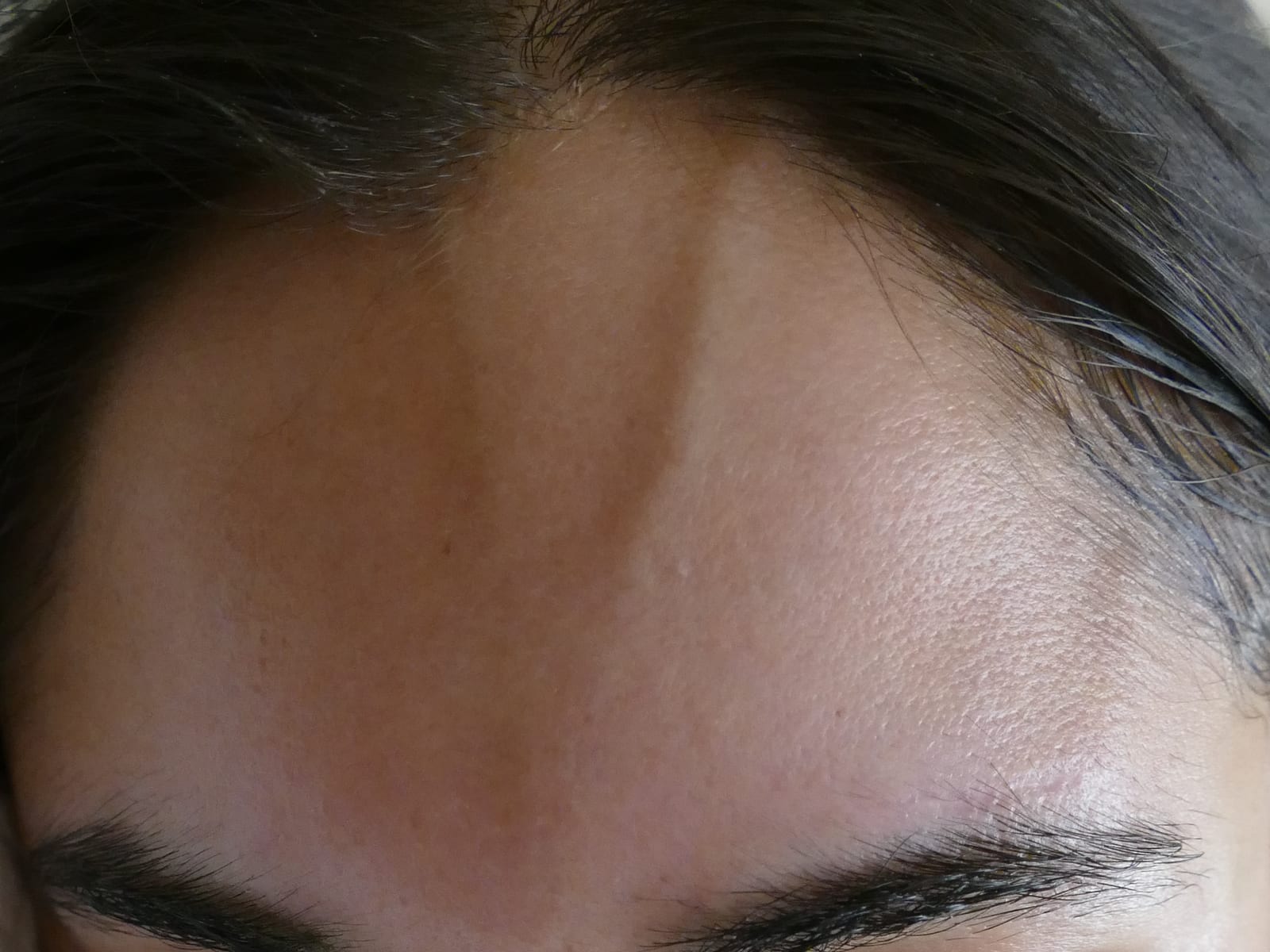
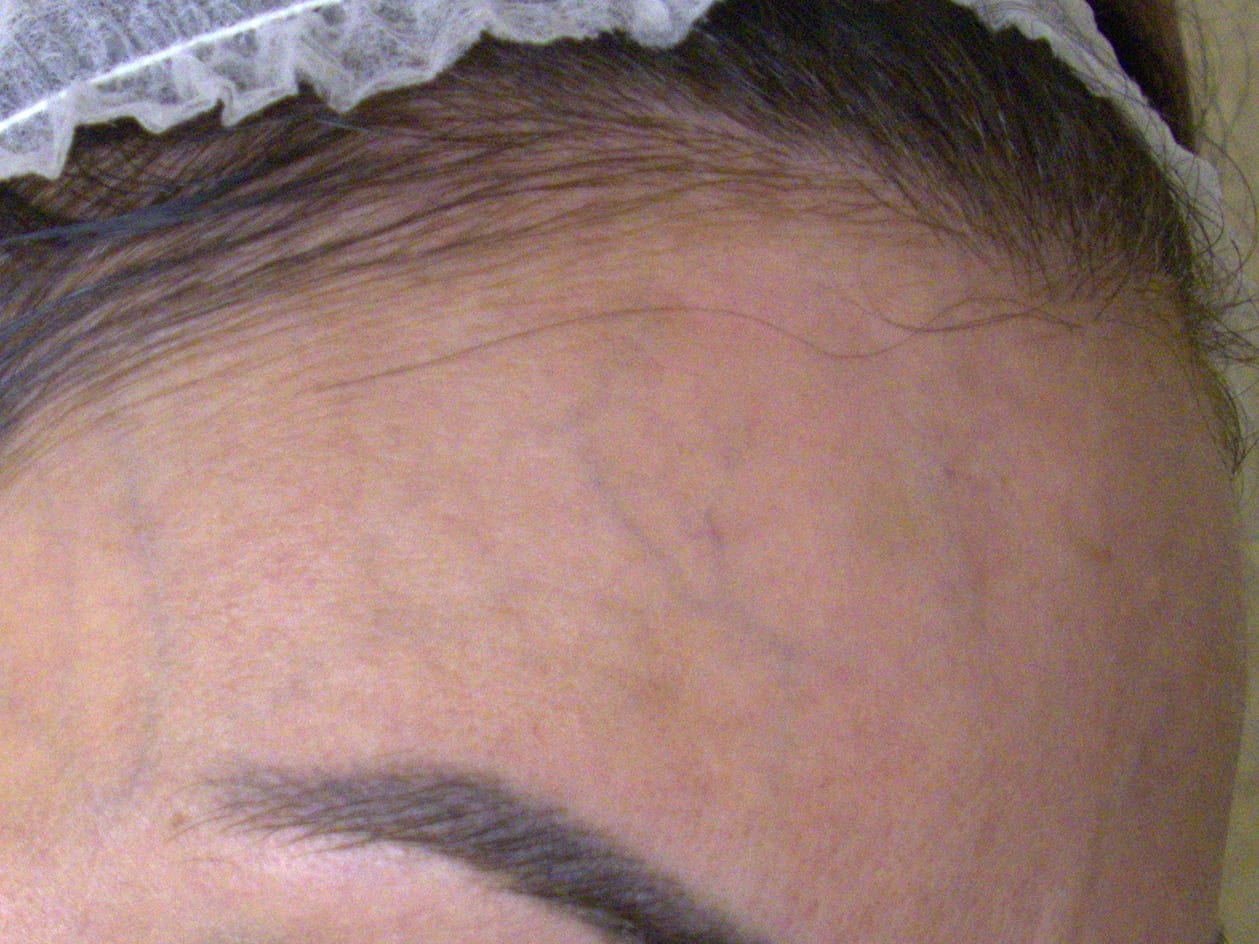
Forehead vein treatment at Nu Vela Laser and Vein Center in Los Angeles is performed by Raffi Dishakjian, MD, who has been treating forehead veins for about 15 years. Big, bulging veins that run down the middle of the forehead are closed from the inside with a laser fiber, and thinner blue temple and branch veins with a skin laser. Below, Dr. Dishakjian explains the treatment in his own words.
Forehead Vein Treatment at a Glance
- Veins treated: bulging veins down the middle of the forehead, and thinner blue temple and branch veins.
- Method: endovenous laser ablation (a laser fiber inside the vein) for large veins, and a skin laser for smaller surface veins. Sclerotherapy injections are generally avoided above the jawline.
- Visit: about 30 minutes, in the office, under local anesthesia.
- Sessions: one for most patients.
- Recovery: swelling for a day or two and possible bruising for a few days to a week. The treated vein is typically absorbed within a few weeks.
- Experience: about 50 patients with prominent midline forehead veins, and several hundred side branch and temple veins.
- Insurance: considered cosmetic, so it is not covered.
Big, Bulging Forehead Veins
I started treating blue forehead veins around 15 years ago, first with the most visible temple and branching veins, with the cutaneous external Nd:YAG 1064 nm Cutera® laser, since these veins are more superficial, small to moderate in size, and easily accessible to the skin laser.
But I realized that many people are bothered by very large central vertical veins that are not always visible but would pop out into a very prominent midline protrusion with any exertion or laughter, becoming the most eye-catching feature on the face. The typical patient for bulging midline forehead veins tends to be relatively young, fit, and average to low in weight-to-height ratio. Often, the bulging forehead vein is the most prominent feature on the patient’s face, with or without other blue branch veins on the temple or forehead.
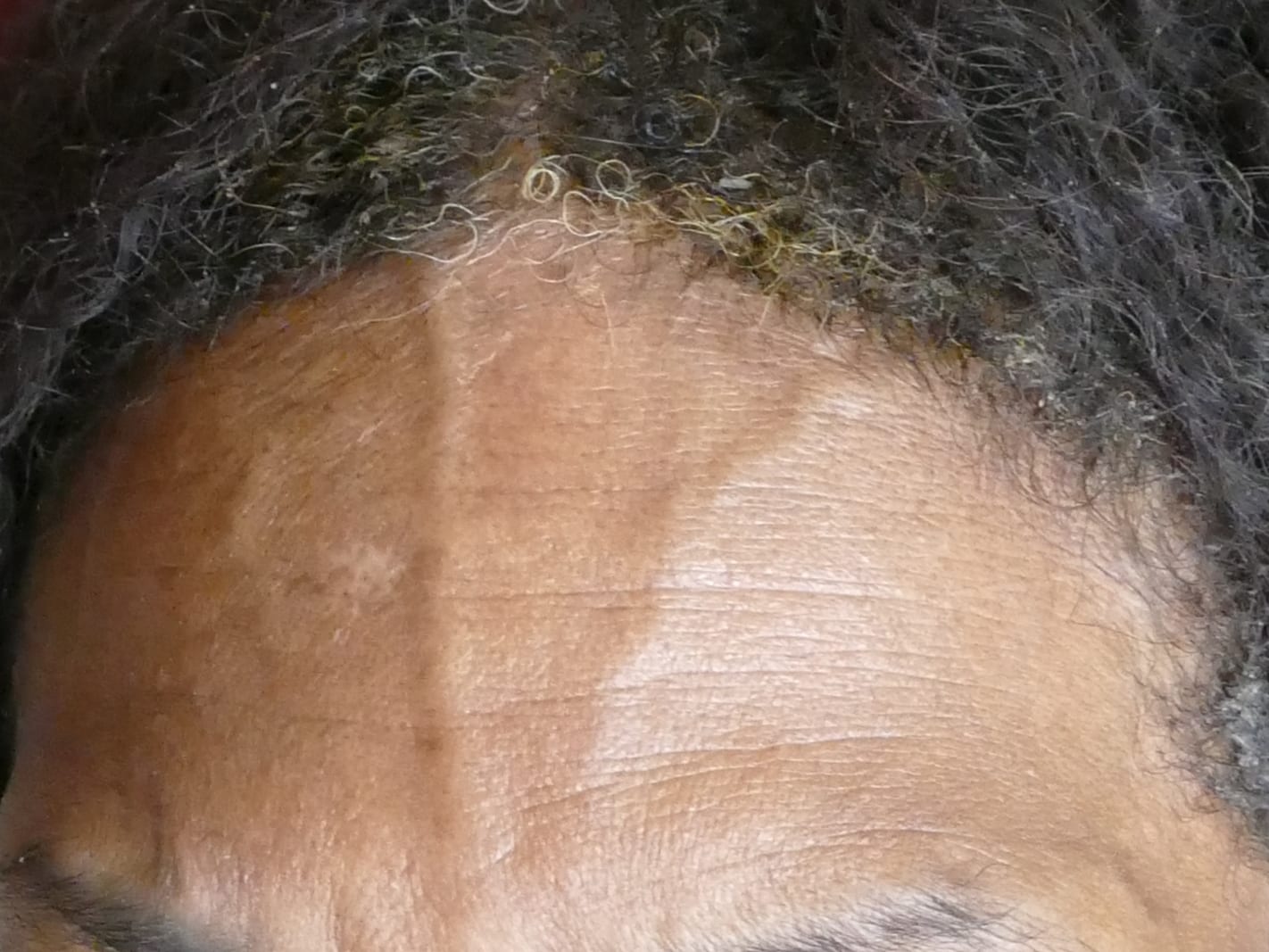
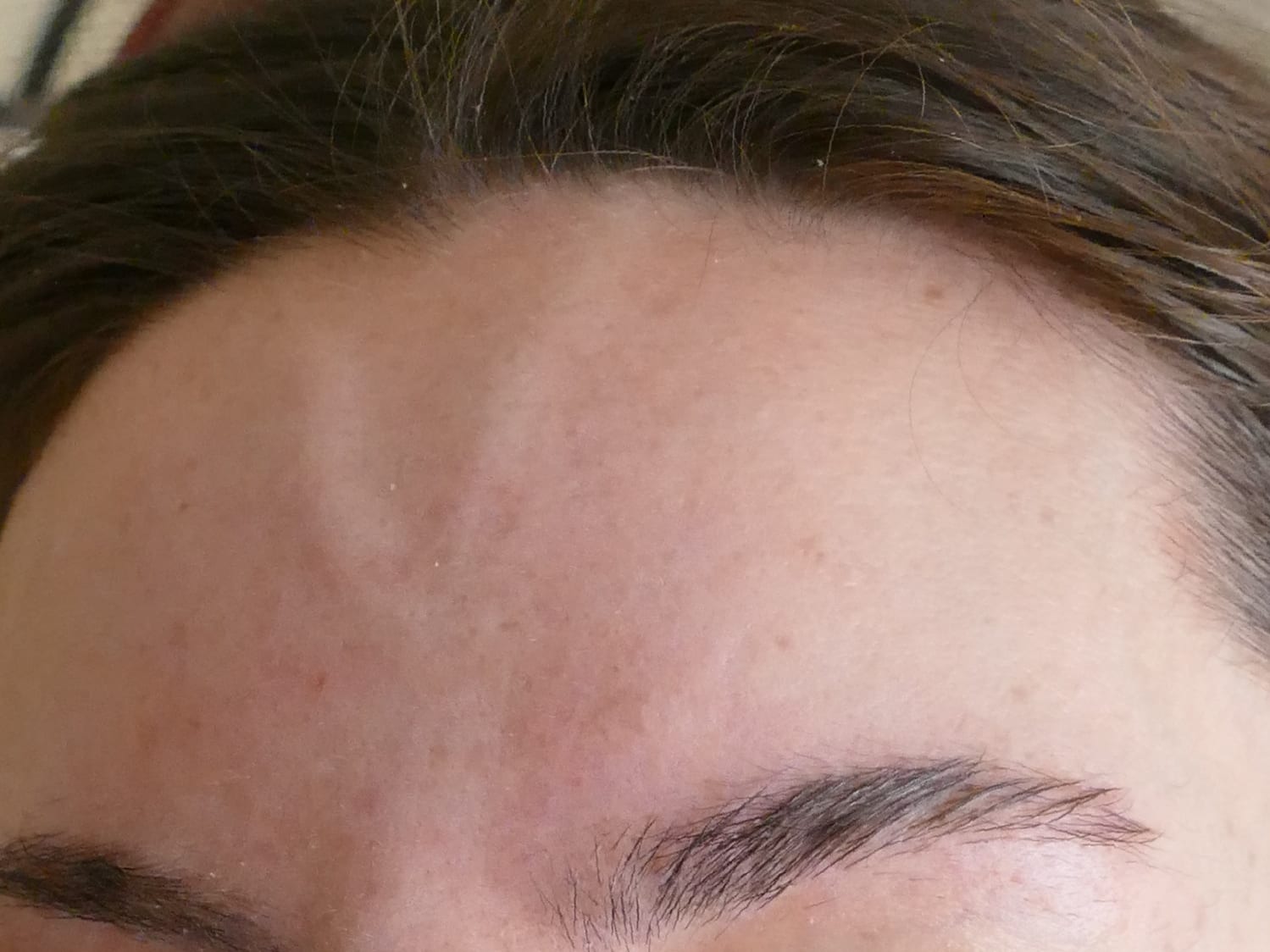
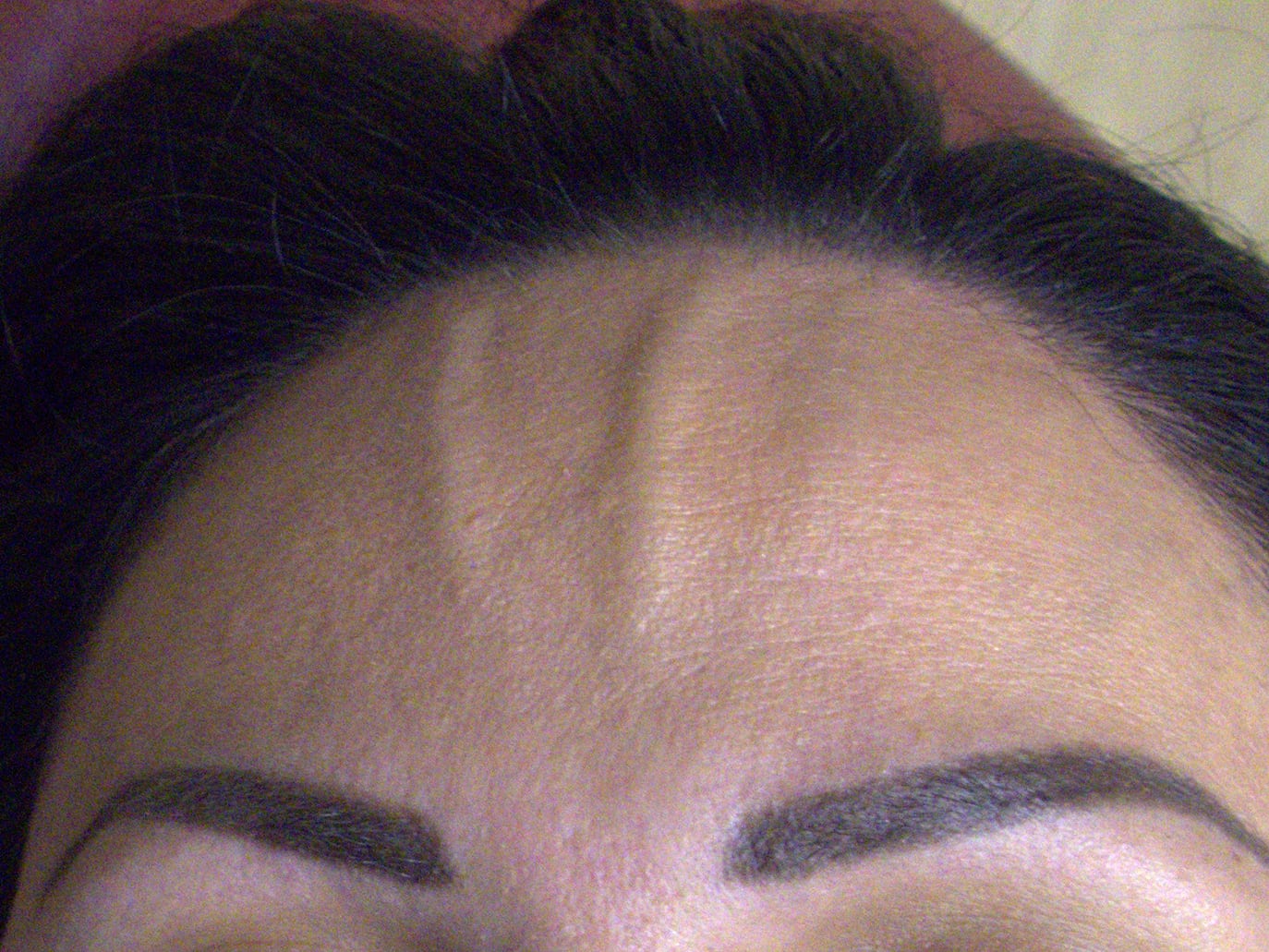
Why Skin Lasers Are Not Enough for Large Veins
Soon it became clear, with experience with vascular lasers, that there was a practical limit to the use of skin lasers to treat these large forehead veins. As these veins become progressively larger, external lasers have a hard time penetrating the full depth of the vein under the skin, and more importantly, even if successful, the disproportionately greater heat generated by a larger vein risks causing serious burns on the skin over the vein.
Closing the Vein from the Inside, with a Laser Fiber
That led me to consider using an internal laser fiber introduced through a tiny IV catheter, whereby the laser would heat-damage the vein from the inside, after having introduced cooling and numbing fluid all around the targeted forehead vein before applying laser energy. This is similar to, and a direct offshoot of, treating dilated varicose veins in the legs, a technique that I had been using regularly, on a daily basis, since 2005, with a well-established record of safety and efficacy.
In fact, there was emerging medical literature supporting this innovative and advanced application of this technology at the time, and I was one of the first vein doctors in California to introduce this technique to my everyday practice, about 10 years ago. Since then, I have treated about 50 patients with prominent midline forehead veins and several hundred side branch and temple veins.
How Forehead Vein Ablation Is Performed
The technique involves placing a small IV catheter in the bulging midline forehead vein near the hairline, after disinfecting the face and injecting a small amount of numbing medicine at the site. Then, under direct ultrasound guidance, a laser fiber is introduced along the whole length of the vein, down to the lower forehead. Just before the laser treatment, a protective numbing and cooling anesthetic fluid (tumescent anesthesia) is injected gently all around the targeted vein. This fluid makes sure only the targeted vein is shut down and all other structures, including skin, muscles, nerves, arteries, and other veins, are protected. For added safety, the heat-based laser treatment is directly monitored and observed with ultrasound vision as the laser energy is applied (Nd:YAG 1319 nm), the laser fiber is gradually withdrawn, and the vein is shut down.
The procedure is ambulatory in nature and done in the office, under local anesthesia, and takes about 30 minutes. I also use this technique sometimes in combination with cutaneous laser treatment, as necessary, to target thinner blue temple and branch forehead veins.
Incidentally, it is worth noting that I also use the same endovenous (laser fiber-based) ablation technique for very large forearm and arm veins that are too large to treat safely and effectively with sclerotherapy injections.
Why Not Sclerotherapy, VeinGogh or Microphlebectomy?
I generally avoid using all sclerotherapy injections above the jawline, to avoid the rare but catastrophic migration of the injected solution that can cause damage to the veins of the eye or the brain. To be sure, the risk may be small, but the outcome could be catastrophic and hardly justifiable with the availability of safer laser treatments.
I have chosen not to use the VeinGogh or Veinwave for smaller surface veins on the forehead, since they provide no distinct advantage over the Nd:YAG 1064 nm cutaneous laser (Cutera®). I also find that microphlebectomies are not necessary for most forehead veins, since they are considered a semi-invasive technique involving skin incisions and surgical tissue trauma.
Who Is a Good Candidate for Forehead Vein Treatment?
Any patient who does not suffer from clotting disorders, is not on blood thinners, and is in a good general state of health is a good candidate for the procedure. Active skin infections over the treatment area are a reason to wait until resolved. I also advise pregnant patients to wait 3 to 6 months following delivery before considering this treatment.
Is Removing a Forehead Vein Safe for Circulation?
Midline forehead veins that pop out mostly with exertion are otherwise rarely associated with serious underlying medical problems. It is worth noting that the head is a highly vascular area of the body, with numerous redundant vascular connections, and these forehead veins do not serve any essential function and can be shut down without any adverse effects.
Darker Skin Tones and Hyperpigmentation
I am often asked about the possible risk of hyperpigmentation after this treatment, especially for darker skin tones. While it is true that any heat-based laser treatment can theoretically result in post-inflammatory hyperpigmentation (darkening of the skin), I have not seen it in my patient population. This can be attributed to the generous use of tumescent anesthesia and, more importantly, the relative melanin-sparing attributes of the Sciton Pro-V laser (1319 nm) that we use, which selectively targets the water content of the vein wall, rather than the blood inside the vessel or the melanin pigment of the skin.
Results and Recovery After Forehead Vein Removal
Most patients will respond to one treatment session if the vein is successfully cannulated. In fact, failure to enter the vein with a catheter at the beginning of the procedure (sometimes due to cold, anxiety, or dehydration) is a leading cause of unsuccessful treatment initiation. We therefore advise our patients to be well hydrated and to engage in a brisk walk outside to warm up the body and avoid cold-related constriction of blood vessels.
After successful treatment, patients should expect some mild to moderate post-inflammatory swelling of the forehead for a day or two, in most instances. Some bruising related to the injection of tumescent anesthesia may also occur, but should resolve within a few days to a week. As the swelling and bruising go away, the results of the treatment will be self-evident. We advise patients not to engage in vigorous exercise or sun exposure until the inflammatory phase subsides. Some patients find that application of a head wrap or ice helps expedite the resolution of the residual swelling.
Ultimately, the treated vein will form internal scar tissue and will typically be completely absorbed within a few weeks and disappear from view.
Risks and Recurrence
Other rare complications that can theoretically happen, as with any heat-based treatment, include pigment changes, scarring, nerve irritation, and skin burns. Recurrence is truly rare for these veins after successful treatment, although other smaller branch veins on the side of the forehead may continue getting gradually larger over time, which can be treated with skin lasers.
“This is one of the treatments with the most enduring results that consistently generate the highest patient satisfaction rates, and for which patients often travel long distances.”
— Raffi Dishakjian, MD
Forehead Vein Treatment FAQs
Why do my forehead veins bulge when I laugh, exercise or bend over?
Do prominent forehead veins mean high blood pressure or a health problem?
Will removing a forehead vein change how my forehead looks or moves?
Can makeup, skincare or Botox hide or shrink prominent forehead veins?
Do forehead veins come back after treatment?
What changes the cost of forehead vein treatment?
Is forehead vein treatment covered by insurance?
Published Research on Forehead Vein Ablation
Laser ablation of forehead veins from inside the vein has also been reported in the medical literature. In a 10-year case series of 93 patients published in 2026 in Dermatologic Surgery, the journal of the American Society for Dermatologic Surgery, the authors concluded that endovenous laser ablation of enlarged supratrochlear forehead veins, the veins that run down the middle of the forehead, is “a safe, effective, and reproducible technique.”
Source: Esteves Pereira C, de Pinho Tavares VM, de Oliveira Esteves A, de Oliveira Esteves A, de Oliveira Esteves F. Endovenous laser ablation of supratrochlear forehead veins: 10-year experience. Dermatologic Surgery. Published online June 24, 2026.
Schedule a Consultation
If a big or bulging forehead vein bothers you, contact Nu Vela Laser and Vein Center to schedule a consultation with Dr. Dishakjian at our office in Porter Ranch, Los Angeles.